🇫🇷👂Extracting Pure French: Jean-François' E-Dropping Technique ⚗️
Bonjour!
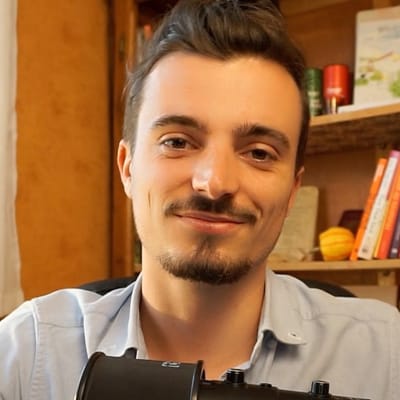
As promised, here's more on Jean-François Roussot and how he uses his copper stills...
Start with life, not with grammar
In a nutshell: Passionate herbalist Jean-François Roussot shows his copper stills and distils linden/lime tree leaves to extract their flavour.
Your Ear Training Challenge
Listen as Jean-François recalls childhood memories and thinks out loud about why he does what he does:
Here's an excerpt from the full lesson:
🤺👂 Listening Challenge #5 - 'E' Dropping
⏮️ Previous challenge
⏭️ Next challenge
📋Challenges List
First Example:
Honest Spelling: What you hear
🗣️👂 pti
What we write
🔡📜 petit
→ p'tit (non-standard spelling used in comic books)
🎬Spot that phrase in the clip (YouTube clips can't be shorter than 5 seconds, so this clip includes extra words.)
What it means
🇬🇧🇺🇸 small/little
Second Example:
Honest Spelling: What you hear
🗣️👂ã-vi-dre-vivr
Note: the tiny squished 'N' on top of the ã signals a Nasalised sound. We spell that sound "an" but we make exactly zero N sound, so it makes more sense to use a special character. More on that in a future lesson.
What we write
🔡📜 envie de revivre
→ envie d'revivre (non-standard spelling used in comic books)
🎬Spot that phrase in the clip (YouTube clips can't be shorter than 5 seconds, so this clip includes extra words.)
What it means
🇬🇧🇺🇸 feeling like reliving
Explanation: The 'E' Dropping Pattern
Let's break down what's happening here:
- In real spoken French, the letter 'e' often disappears completely when it appears in certain positions
- This is especially common with the unstressed 'e' (also called schwa) in the middle or end of words
- This is NOT a sloppy habit - it's how French is actually spoken by everyone, including politicians, professors, and yes, herbalists like Jean-François!
Why this matters:
If you've ever thought "Why can't I understand French people when they speak? I know the vocabulary!" - this is one big reason. When you drop a bunch of 'e's, words blend together in ways textbooks never prepare you for.
Your challenge this week:
- Listen to normal conversations (YouTube, podcasts, etc.)
- Try to spot when native speakers drop their 'e's
- Practice saying common phrases both ways - textbook style and "real French" style
We naturally speak relatively fast, but once you start tuning your ears in to these patterns, everything gradually slows down.
I hope this was helpful. As always, merci for your interest in my language.
Bonne journée,
Valentin
PS - Get the full lesson here. Get a special launch price for the Learner tier here and for the Doer tier here.
No spam, no sharing to third party. Only you and me.
Member discussion