
🥸 What the fõãẽk are these squiggles?
They take their origin in Hercule Poirot's legendary moustache: ~
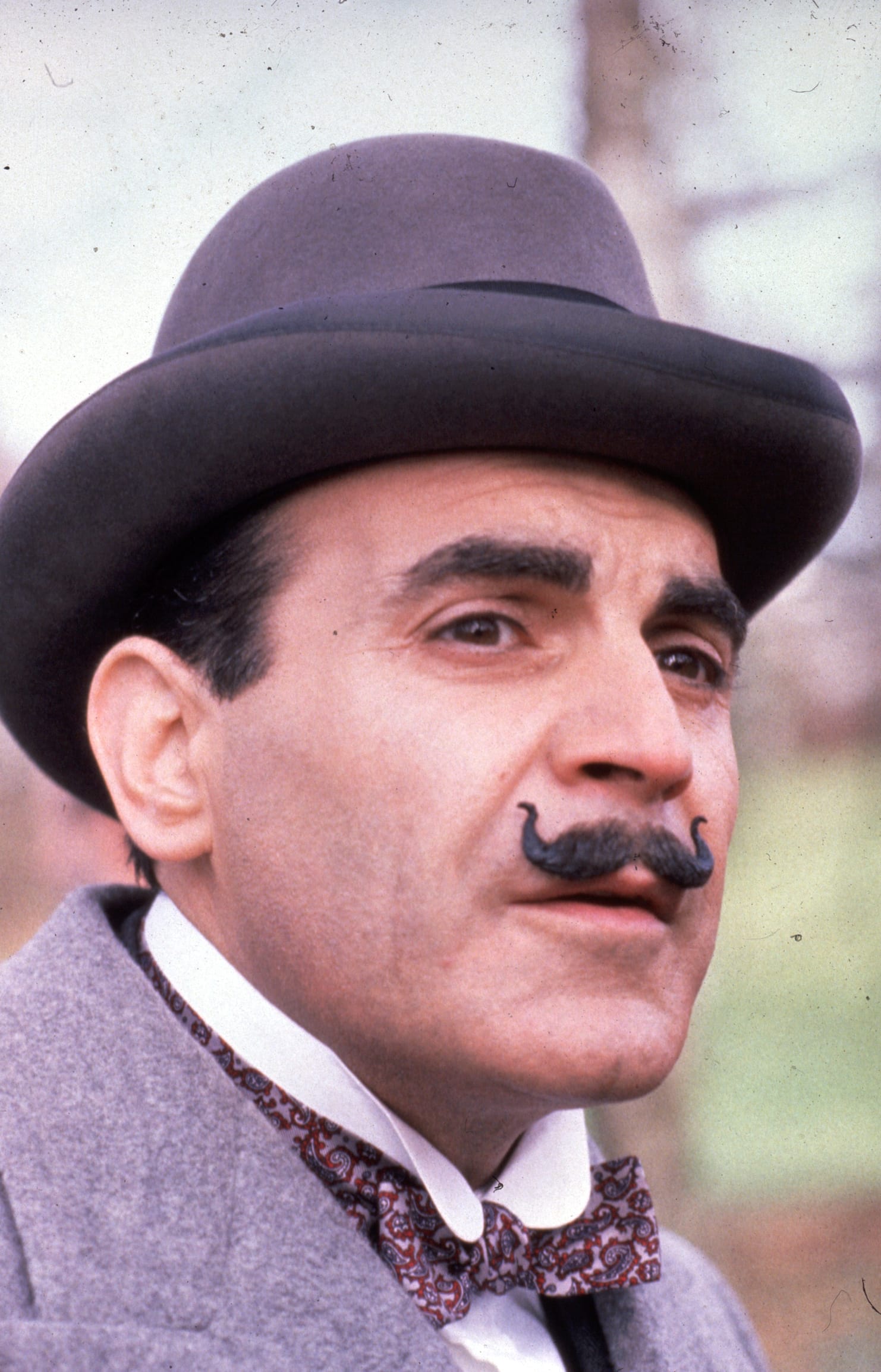
Je plaisante - I'm joking.
Simply be present, pay attention, and let these ideas sink in naturally, like a Mediterranean wave washing over warm sand—each time leaving subtle impressions that gradually reshape your understanding.
Soon, they'll become second nature without you having to force it. No cramming, no stress. The Mediterranean way (except behind the wheel).
The tilde (~) actually evolved from a shorthand notation used by Spanish scribes in the Middle Ages.
Originally, when Latin words had a double 'n' (like "donna"), medieval scribes would save space by writing just one 'N' with a small 'N' above it.
Since Spanish scribes much preferred to take a siesta under an olive tree than spend all their time meticulously writing out double letters, over time, this little 'N' simplified into the wavy line we now call the 'tilde': doña.
Nutshell: ~= tiny N.
Now why would I use this medieval N?
Because Honest Spelling is supposed to be honest and clear, but letter combinations like "on", "an", "in", "en", etc... are ambiguous. So it makes more sense to use a special character like ẽ ã õ.
See, the "on" in "bonjour" makes exactly zero N sound, but the "on" in "bon ami" does.
So it makes more sense for the Honest Spelling to be:
- bonjour = bõ-jour
- bon ami = bõ-nami
What's more, the "on" in "bonjour" makes no 'O' sound either, it makes a nasalised sound that doesn't exist in English. But the "on" in "bonnet" makes both an N sound and an 'O' sound 🤷
Using a squished N or not makes that clear:
- bonjour = bõ-jour
- bonnet = bo-né
Another example: the "en" in "sent" and the "an" in "sans" make the exact same sound:
Honest Spelling (actually, the two entire words sound exactly the same)
- sent = sã
- sans = sã
However, the "en" in "sien" does not sound like the "en" in "sent". It actually sounds exactly like the "in" in "vin" 🤪
So it makes more sense for the Honest Spelling to be:
- vin = vẽ
- sien = syẽ
- sent = sã
To finish off, here's a natural example that came up in a conversation with one of my 1:1 learners:
🇬🇧🇺🇸 for a long time
🇫🇷📜 pendant longtemps
Honest Spelling: What we say
🗣️👂 pã-dã-lõ-tã
Look at them side-by-side:
🇫🇷📜 pendant longtemps
🗣️👂 pã-dã-lõ-tã
You've got three different ways of writing the same sound ('en', 'an', 'em') in a super common phrase of just two words. As the kids say these days, the math ain't mathing.
That's why I use squiggles.
Let's recap:
ã =
ẽ =
õ =
Those sounds don't exist in English so they can be challenging to tell apart and hear clearly at first. I'll create some ear training exercises for that in the future. For now, if you remember only one thing from this mini-lesson, it should be this:
The tiny squished 'N' on top of the ã, õ, ẽ, all signal a Nasalised sound.